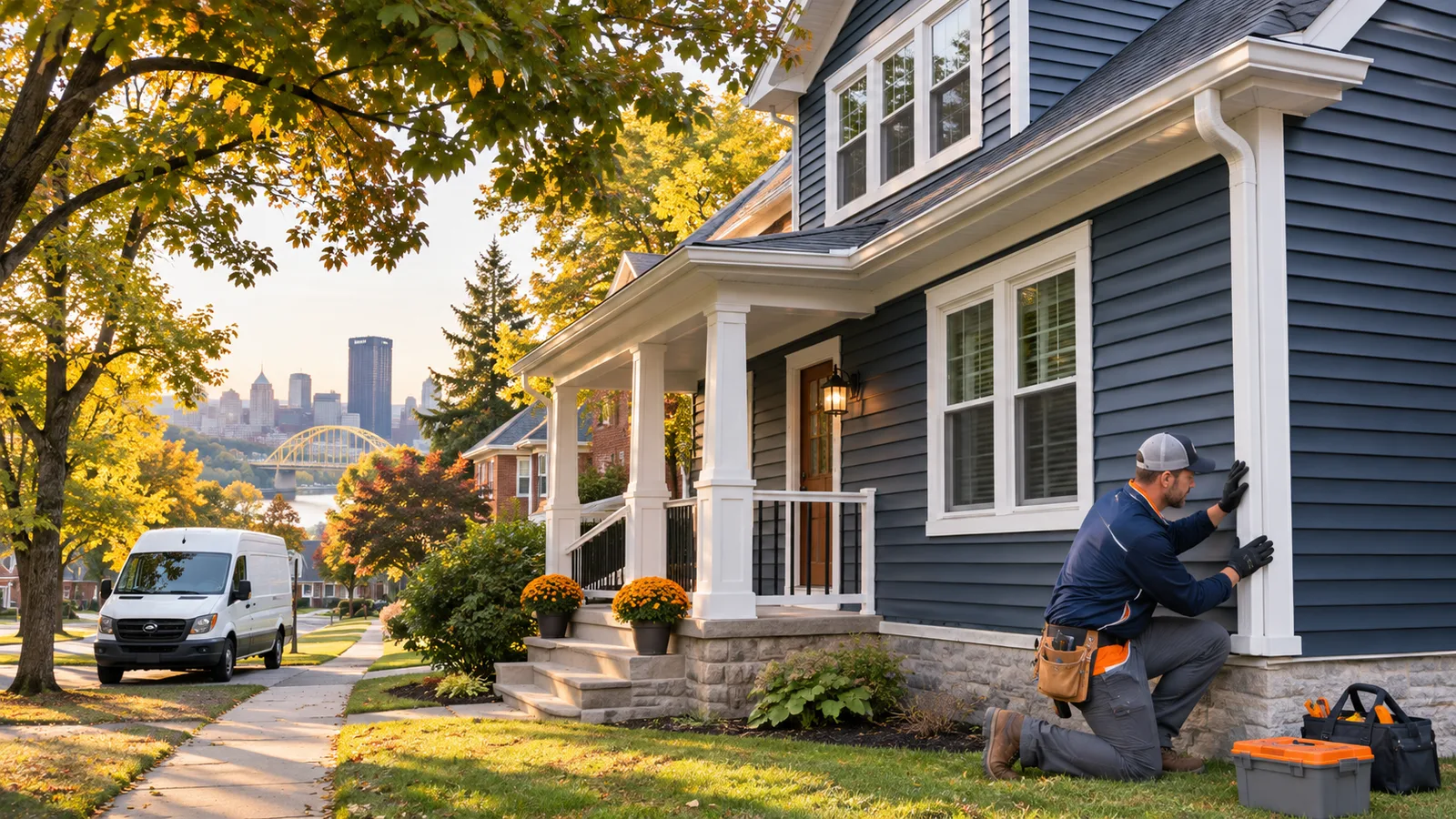
A Pittsburgh home with newly installed siding, clean corner details, and finished trim shown in natural daylight

Siding replacement in Pittsburgh, Pennsylvania

Pittsburgh Siding Replacement

Replace worn, loose, or outdated siding with a properly detailed exterior built for Western Pennsylvania weather.

Exterior assessment Written project scope Weather-barrier planning Final walkthrough

Replacement planning

A Better Exterior Starts With the Right Scope

Pittsburgh siding replacement protects the wall assembly while giving the house a cleaner, more consistent appearance. Cracked panels, open seams, loose courses, and deteriorated trim can let wind-driven rain reach materials that should remain dry. Replacement also creates an opportunity to correct flashing, install a suitable water-resistive barrier, and address damaged sheathing before it is covered again.

Siding Installers Pittsburgh approaches the work as a siding company Pittsburgh homeowners rely on, with attention to removal, substrate preparation, manufacturer fastening requirements, and exterior details. The estimate should identify the siding material, trim package, wall preparation, disposal, and any allowances for concealed damage. That written scope makes competing proposals easier to compare.

Pittsburgh's hills, closely spaced houses, mature neighborhoods, and changing seasons affect planning. Steep lots may require added staging, while narrow side yards can limit material handling. Freeze-thaw cycles and wind-driven rain also make flashing and moisture management more than finishing details. They are part of a sound installation.

Book Your Free Inspection

Repair or replacement

When Replacement Makes More Sense Than Another Repair

A small repair may be reasonable when damage is isolated and a compatible panel is available. Full replacement becomes the stronger choice when failures appear across several walls, the existing siding is brittle or repeatedly loosens, or repairs would leave obvious color and profile differences.

Watch for bowed courses, cracked or missing panels, gaps around windows, soft trim, peeling finishes, and signs that water has reached the sheathing. Interior staining can have several causes, so it should be traced before exterior work begins. Siding should never be used to cover active leakage or decayed wood.

Older housing in places such as the North Side and Lawrenceville may have layered exterior assemblies or additions built at different times. Dormers and tightly spaced homes in neighborhoods such as Bloomfield can also make access and flashing details more involved. In Mt. Washington, steep grades may affect scaffold placement and material movement. A field inspection is the practical way to identify these conditions before pricing is finalized.

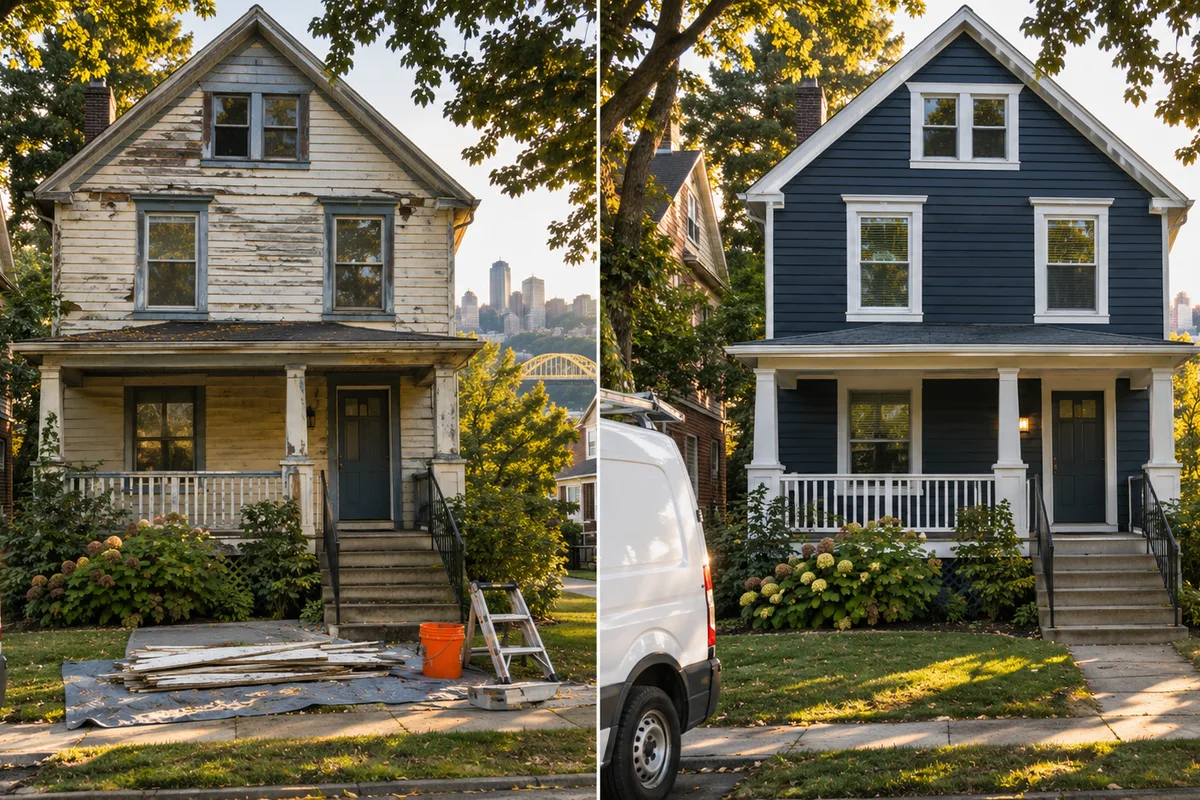
A side-by-side view of a Pittsburgh house before siding removal and after replacement, with matching trim and neatly finished window openings
Replacement creates a consistent exterior and exposes wall conditions that spot repairs may leave hidden.

Material options

Choosing Siding for a Pittsburgh Replacement

Vinyl Siding

Vinyl is widely selected for its low routine maintenance and broad choice of profiles and colors. Correct fastening leaves room for thermal movement, which helps prevent buckling. Panel thickness, wind rating, trim details, and manufacturer instructions should all be reviewed.

Fiber Cement

Fiber cement provides a painted wood-like appearance and resists damage from insects and moisture when installed correctly. It is heavier than vinyl, requires suitable cutting practices, and depends on specified clearances, flashing, and field finishing.

Engineered Wood

Engineered wood siding offers defined grain patterns and is available in lap and panel formats. Cut edges, joints, clearances, and paint or finish requirements need careful attention to limit moisture exposure.

Insulated Options

Insulated siding or continuous exterior insulation may improve wall performance, but the complete assembly must be planned around window depth, trim, flashing, and drainage. Product claims should be evaluated separately from the existing home's actual wall construction.

Wall assembly details

What a Complete Siding Replacement Should Include

The work begins with safe removal of existing siding and accessories. Once the walls are exposed, the installer checks the sheathing for rot, swelling, open joints, and areas that no longer hold fasteners. Necessary repairs should be documented before new materials cover the wall.

A water-resistive barrier is then installed or repaired with properly lapped seams. Window and door openings need compatible flashing that directs water outward. Kick-out flashing is especially important where a roof edge meets a sidewall because it diverts runoff away from the cladding. Utility penetrations, exterior lights, vents, and hose connections need mounting blocks or other details suited to the siding system.

Starter strips, inside and outside corners, and window trim establish the layout before field courses are installed. Vinyl panels are fastened without pinning them tightly, while fiber cement and engineered wood follow different nailing, joint, and clearance rules. The manufacturer's instructions govern the exact method. Final work includes caulking only where specified, cleanup, and a walk-through of the completed exterior.

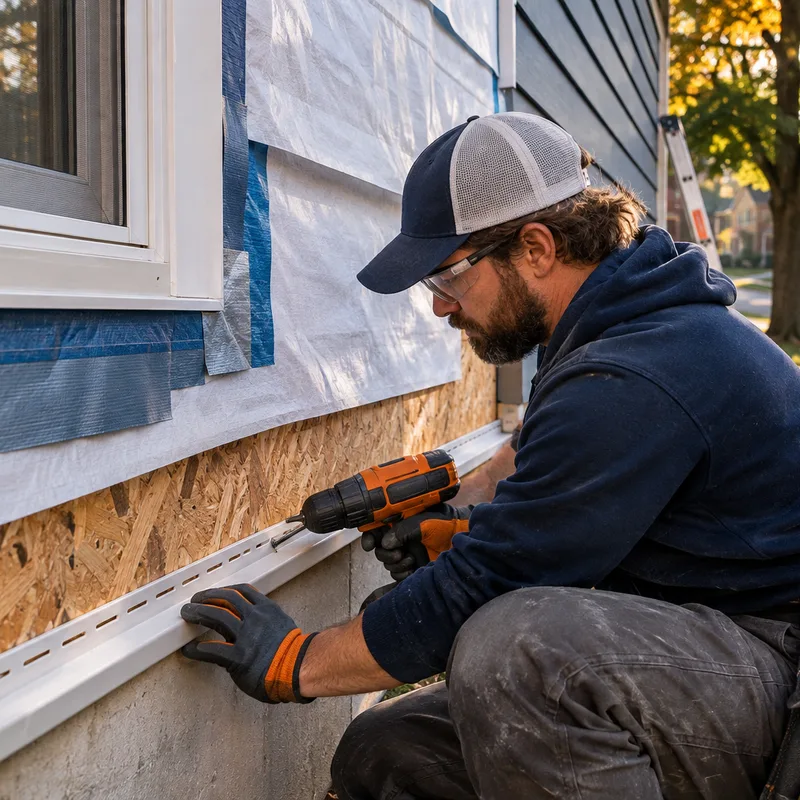
Close view of a siding replacement in progress showing exposed sheathing, a lapped water-resistive barrier, window flashing, and starter-strip installation
The layers behind the finished siding control drainage and provide a sound fastening surface.

Assessment to final review

Our Pittsburgh Siding Replacement Process

  1. 01

    Exterior Assessment

    We review wall dimensions, siding condition, trim, penetrations, access, and visible moisture concerns. The assessment also identifies steep grades, narrow work areas, and landscaping that may affect staging.

  2. 02

    Material and Detail Selection

    You choose the siding type, profile, color, trim treatment, and related accessories. Product specifications and samples help confirm how the proposed exterior will look and perform.

  3. 03

    Written Scope

    The proposal defines removal, disposal, wall preparation, new materials, installation details, and how concealed sheathing damage will be handled. Permit requirements, if applicable to the specific scope and property, should be confirmed with the City of Pittsburgh or the municipality where the home is located.

  4. 04

    Removal and Wall Preparation

    Existing cladding is removed in a controlled sequence. Exposed walls are checked, approved repairs are completed, and the drainage layer and flashing are prepared for the selected system.

  5. 05

    Installation and Final Review

    Siding and trim are installed according to the product requirements. The work area is cleaned, exterior details are inspected, and the finished project is reviewed with the homeowner.

Project budgeting

How Much Does Siding Replacement Cost in Pittsburgh?

Pittsburgh siding replacement typically costs about $10,000 to $30,000 for a whole-house project, while larger homes, premium materials, extensive trim, or difficult access can raise the total. Vinyl generally falls toward the lower end; fiber cement and detailed engineered-wood installations tend to cost more.

Final pricing changes with wall area, stories, gables, tear-off layers, sheathing repairs, trim, insulation, and staging on steep or narrow lots. Material grade and window detailing matter too. The exact cost is confirmed after an exterior inspection and written scope.

Book Your Free Inspection

Get a written siding scope that accounts for wall condition, materials, trim, access, and Pittsburgh weather before work begins.

Book Your Free Inspection

Homeowner questions

Siding Replacement Pittsburgh Homeowners Ask About

How long does siding replacement take in Pittsburgh?

A typical whole-house siding replacement often takes about one to two weeks once installation begins, although the actual schedule depends on size, material, wall repairs, access, and weather. Steep lots in areas such as Mt. Washington or tightly spaced houses in Bloomfield may require additional staging time. The schedule should also allow for concealed sheathing repairs discovered after removal.

Can siding be replaced during cold weather?

Yes, siding can be replaced during colder weather when product requirements and safe working conditions permit. Vinyl becomes less flexible at low temperatures, and sealants have application temperature limits. Snow, ice, high wind, or wet wall conditions may delay work because flashing, barriers, and sealants must be installed on suitable surfaces.

Do I need to replace all of my siding?

No, full replacement is not always necessary when damage is limited and a compatible material can be sourced. Replacement is more practical when deterioration affects several elevations, the existing product is brittle, or matching its profile and color is unlikely. An inspection should also determine whether the problem is limited to the cladding or extends into trim, flashing, or sheathing.

Does new siding improve energy efficiency?

New siding alone does not guarantee a large energy improvement, but replacement provides access to air-sealing and exterior-insulation options. The result depends on the existing wall assembly, insulation continuity, window details, and installation method. Any insulation proposal should state the product's R-value and explain how added thickness will be managed at openings and penetrations.

What happens if rotten sheathing is found?

Damaged sheathing should be removed and replaced before new siding is installed. Because the full condition may not be visible until tear-off, the contract should explain how concealed repairs are priced and approved. Photographs and a written change description give the homeowner a clear record before that work proceeds.

Is a permit required for siding replacement in Pittsburgh?

Permit requirements depend on the property and the exact scope, so they should be confirmed before work starts. Straight replacement may be treated differently from structural repairs, insulation changes, or work on a property subject to historic review. The City of Pittsburgh's Department of Permits, Licenses, and Inspections is the appropriate authority for properties within city limits; surrounding municipalities use their own offices.

How should I compare siding replacement estimates?

Compare the wall area, product line, tear-off work, water-resistive barrier, flashing, trim, disposal, and treatment of concealed damage. Confirm whether each estimate covers the same elevations and accessory details. Warranty language matters too: separate the manufacturer's material warranty from the installer's workmanship terms.

Plan Your Siding Replacement With a Clear Scope

Tell Siding Installers Pittsburgh what you are seeing on the exterior. We will help you assess the condition, compare suitable materials, and define the work needed for a durable replacement.