
Loose or Missing Panels
Wind can disengage vinyl siding from the course beneath it or pull fasteners through a damaged nailing hem. The affected area should be checked for hidden tears and water entry before it is secured.
Serving Pittsburgh, Pennsylvania & surrounding areas
Mon–Fri 8am–6pm Sat 9am–2pm
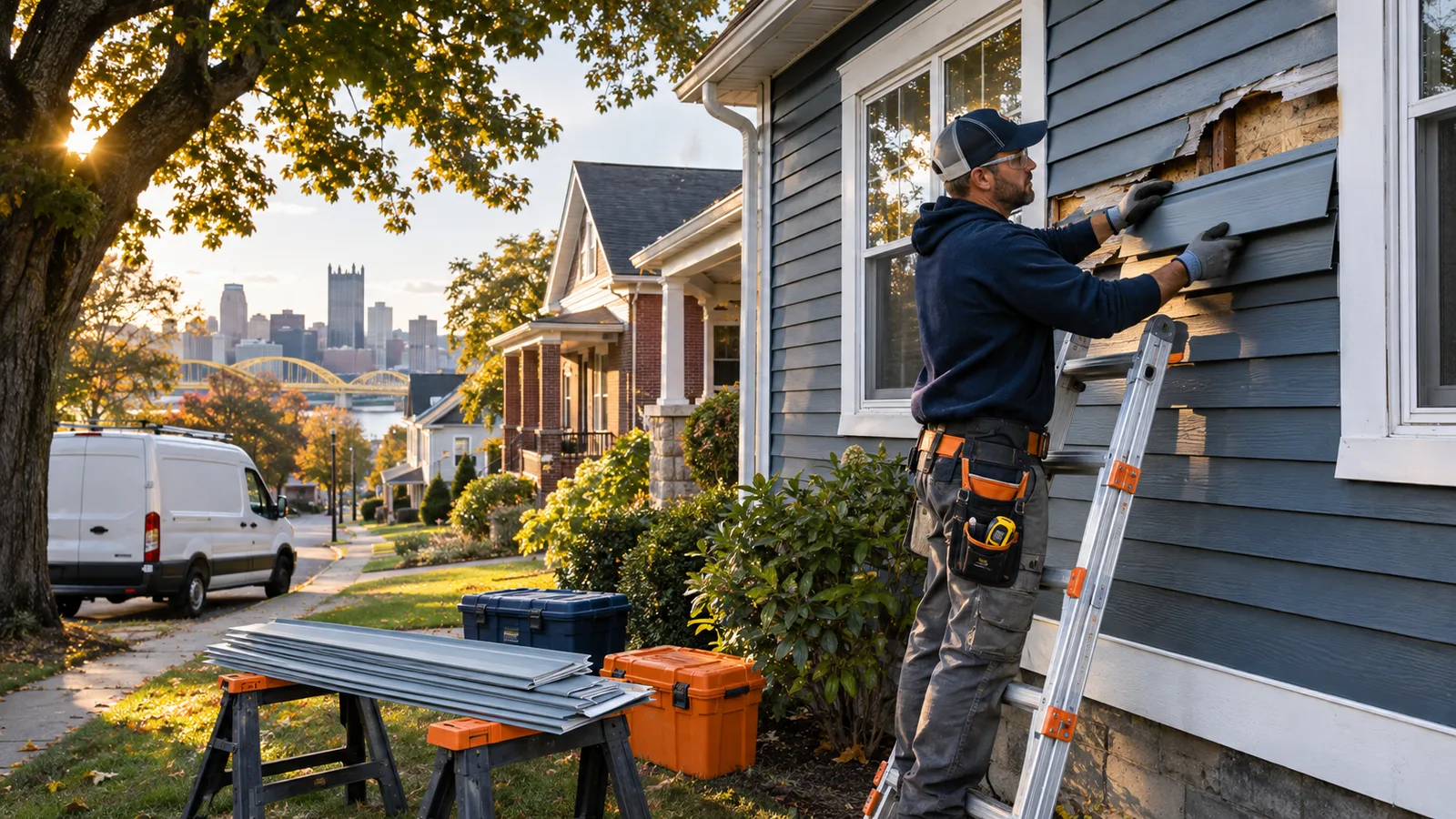
Siding repair in Pittsburgh, Pennsylvania
Repair damaged siding before water reaches the wall assembly, with careful material matching and a clear scope based on what your home needs.
Targeted exterior restoration
For siding repair Pittsburgh homeowners need more than a patch that looks acceptable from the street. The repair must shed water, allow for normal material movement, and tie into the existing exterior without damaging sound courses. Loose panels, cracked vinyl, open seams, impact damage, and deteriorated trim can expose the weather-resistant barrier and sheathing if they are left unresolved.
Siding Installers Pittsburgh begins by tracing the visible damage to its source. Wind may have released a panel from its nailing hem. A leak near a window may point to failed flashing rather than the siding itself. Heat can distort vinyl, while repeated moisture exposure can soften wood-based materials. The cause determines whether a limited repair is appropriate or whether adjacent components also need attention.
We are Pittsburgh's siding specialists, planning repairs around the existing wall assembly, material profile, access, and exposure to weather. That matters in a city where steep lots and closely spaced houses can affect ladder placement, staging, and material handling. The goal is a durable repair with a written scope, not unnecessary replacement.
Repair scope and matching
A focused repair is often practical when damage is confined to a defined area and the surrounding siding remains serviceable. Common work includes replacing cracked or punctured panels, securing loose courses, correcting separated seams, repairing corner posts, and replacing damaged J-channel around doors or windows. Depending on the material, work may also involve fastening fiber-cement boards correctly, replacing deteriorated wood siding, or resealing appropriate joints.
Matching takes care. Vinyl profiles vary in exposure, texture, thickness, and locking geometry, so color alone does not establish compatibility. Existing siding can also fade after years of ultraviolet exposure. A new panel may be the correct original color yet look different at first. When an exact product is unavailable, the options should be discussed before work begins. A less visible wall may provide a suitable matching piece, with the new material installed in that location, but only when removal will not harm otherwise sound siding.
Older housing in areas such as the North Side can have multiple exterior layers added over time. Dormers and tightly spaced homes in neighborhoods such as Lawrenceville can complicate access. These conditions make inspection and careful removal especially important.
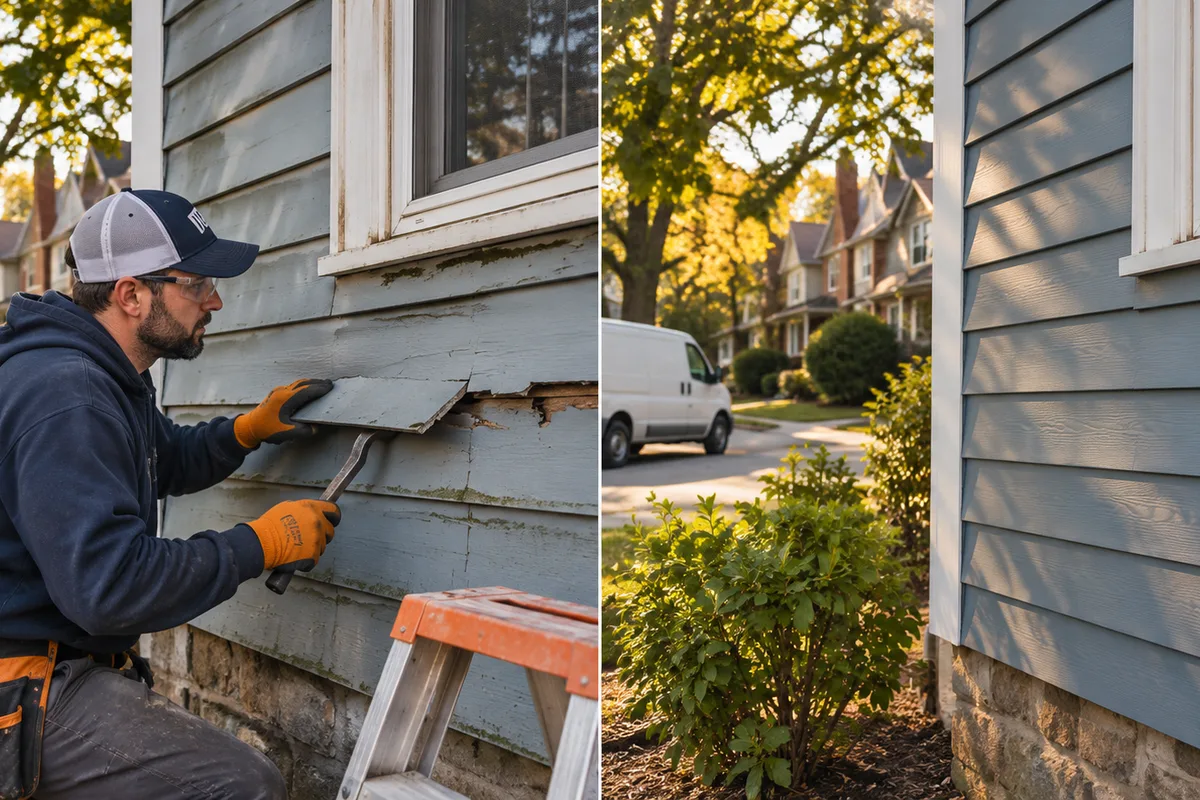
Visible warning signs
Wind can disengage vinyl siding from the course beneath it or pull fasteners through a damaged nailing hem. The affected area should be checked for hidden tears and water entry before it is secured.
A puncture creates a direct path behind the exterior cladding. Replacing the damaged piece is generally more dependable than filling a large break with surface sealant.
Vinyl siding must be fastened loosely enough to expand and contract. Nails driven too tightly, blocked movement, or uneven substrate conditions can cause visible distortion.
Soft wood siding, swollen engineered material, or staining near a seam can indicate persistent moisture. The damaged material and the source of moisture both require evaluation.
Gaps around windows, doors, corners, and utility penetrations deserve prompt attention. Flashing and trim details manage water at these transitions, so caulk alone is not always the right repair.
Stains, peeling paint, or dampness on an exterior-facing wall may originate at a siding penetration, flashing detail, or another part of the wall assembly. An exterior inspection helps narrow the cause.
Weather-ready repair details
Pittsburgh weather puts exterior cladding through repeated wetting, freezing conditions, summer heat, and wind. Freeze-thaw cycles are especially hard on already cracked materials because trapped moisture can expand and widen openings. Repairs also need suitable working conditions. Some sealants and coatings have manufacturer temperature and moisture limits, and installing them outside those limits can shorten their service life.
The wall behind the siding matters as much as the visible face. Siding is a water-shedding layer, not the only defense against moisture. Housewrap or another weather-resistant barrier, properly integrated flashing, and correctly detailed penetrations help direct incidental water outward. If removal reveals torn barrier material, deteriorated sheathing, or missing flashing, those findings should be documented before the repair is closed.
Material-specific methods matter too. Vinyl panels need room for movement and should not be pinned tightly. Fiber cement requires compatible fasteners, suitable clearances, and treatment of cut edges according to manufacturer instructions. Wood repairs may require removal of decayed material and correction of the moisture source before priming and finishing. Aluminum siding is prone to denting and can be difficult to match when a profile is discontinued.
Book Your Free InspectionInspection to final review
The visible defect, nearby courses, trim, penetrations, and likely water path are examined. Access limitations and signs of concealed damage are recorded.
The siding type, profile, exposure, texture, and likely match are identified. The written scope distinguishes required work from options that depend on what removal reveals.
Affected pieces are released carefully to limit disturbance to sound siding. The exposed weather-resistant barrier, flashing, and substrate are checked before new material is installed.
Replacement components are cut, fitted, and fastened with the clearances appropriate to the material. Trim and joints are restored using compatible products.
Alignment, locking seams, fastening, transitions, and cleanup are checked. Any unavoidable color or texture difference is reviewed in normal viewing conditions.
Repair budgeting
Siding repair in Pittsburgh typically ranges from about $350 to $1,500 for a localized repair, while larger areas or work involving sheathing, flashing, difficult access, or discontinued materials can reach $1,500 to $5,000 or more. These are general, nonbinding ranges rather than a quote.
Final pricing depends on siding type, damaged area, material availability, wall height, site access, trim details, and concealed deterioration. Steep terrain or narrow spacing between homes may require added setup. Exact cost is confirmed after an on-site inspection establishes the repair scope.
Condition-based recommendations
Repair usually makes sense when damage is isolated, compatible material can be obtained, and the surrounding installation remains secure. A few broken panels from an impact, one loose course after wind, or a limited area of wood deterioration may fit that description. A repair can preserve serviceable siding and avoid disturbing a larger wall.
Broader replacement may be worth discussing when damage appears across several elevations, the siding has become brittle, the profile cannot be matched, or inspection finds widespread substrate trouble. Repeated repairs in different areas can also indicate that the cladding is near the end of its useful service life. The recommendation should follow the condition found, rather than a preset sales approach.
Appearance is part of the decision. On prominent façades in neighborhoods with closely spaced historic housing, such as the Mexican War Streets, a mismatch may be more noticeable because the elevation is viewed at close range. In hillside areas, upper walls can require specialized access even when the damaged area is small. A clear proposal should account for both factors.
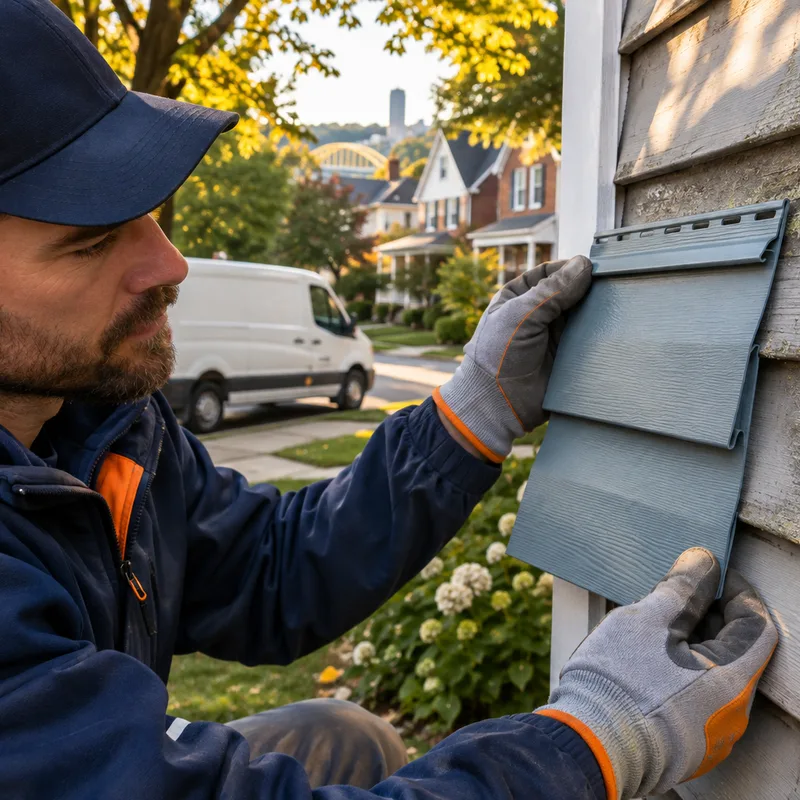
Have damaged siding inspected before the opening spreads or repeated moisture reaches the wall beneath it. A defined scope will clarify the cause, repair options, material match, and access needs.
Book Your Free InspectionHomeowner questions
Open holes, missing panels, and gaps around penetrations should be addressed promptly because they can expose the weather-resistant barrier to repeated rain and wind. Temporary protection may be appropriate until permanent material is available, but it should not trap water behind the siding. Pittsburgh's wet weather and freeze-thaw cycles can worsen an existing opening.
An exact visual match is not always possible because existing siding changes with age and ultraviolet exposure. The first step is identifying the manufacturer, profile, exposure, texture, and original color where possible. If the product is discontinued, options may include a close compatible match or moving an existing panel from a less visible wall, provided it can be removed without damage.
Some siding repairs can be completed during winter, but temperature, precipitation, material brittleness, and product instructions affect scheduling. Vinyl is more prone to cracking when handled in cold conditions, and sealants have specified application ranges. Emergency openings can often be protected first, with temperature-sensitive work finished when conditions meet product requirements.
The exposed area should be inspected for torn weather-resistant barrier, damp or deteriorated sheathing, and faulty flashing before it is covered. The full extent may not be visible until damaged panels are removed. A written scope should explain how concealed conditions will be documented and approved if they change the work.
A small, accessible repair with material on hand may be completed in part of a day, while larger or higher areas can require one or more working days. Material sourcing, weather, staging on steep Pittsburgh lots, and concealed wall damage can extend the schedule. Timing should be confirmed after inspection.
Loose vinyl siding does not always need replacement if the panel, locking edge, and nailing hem remain intact. It may be possible to relock and correctly secure the course. A cracked lock, torn hem, distorted panel, or fastening problem across a larger area may require replacement or broader correction.
Caulk is appropriate only at specific joints and is not a substitute for correct flashing or an intact weather-resistant barrier. Applying sealant across vinyl laps or drainage paths can trap water and restrict movement. Leaks near windows, doors, roof intersections, and utility penetrations require inspection of the full transition detail.
Describe the damaged area and arrange an inspection. Siding Installers Pittsburgh will assess the cause, material match, access, and repair scope so you can make an informed decision.