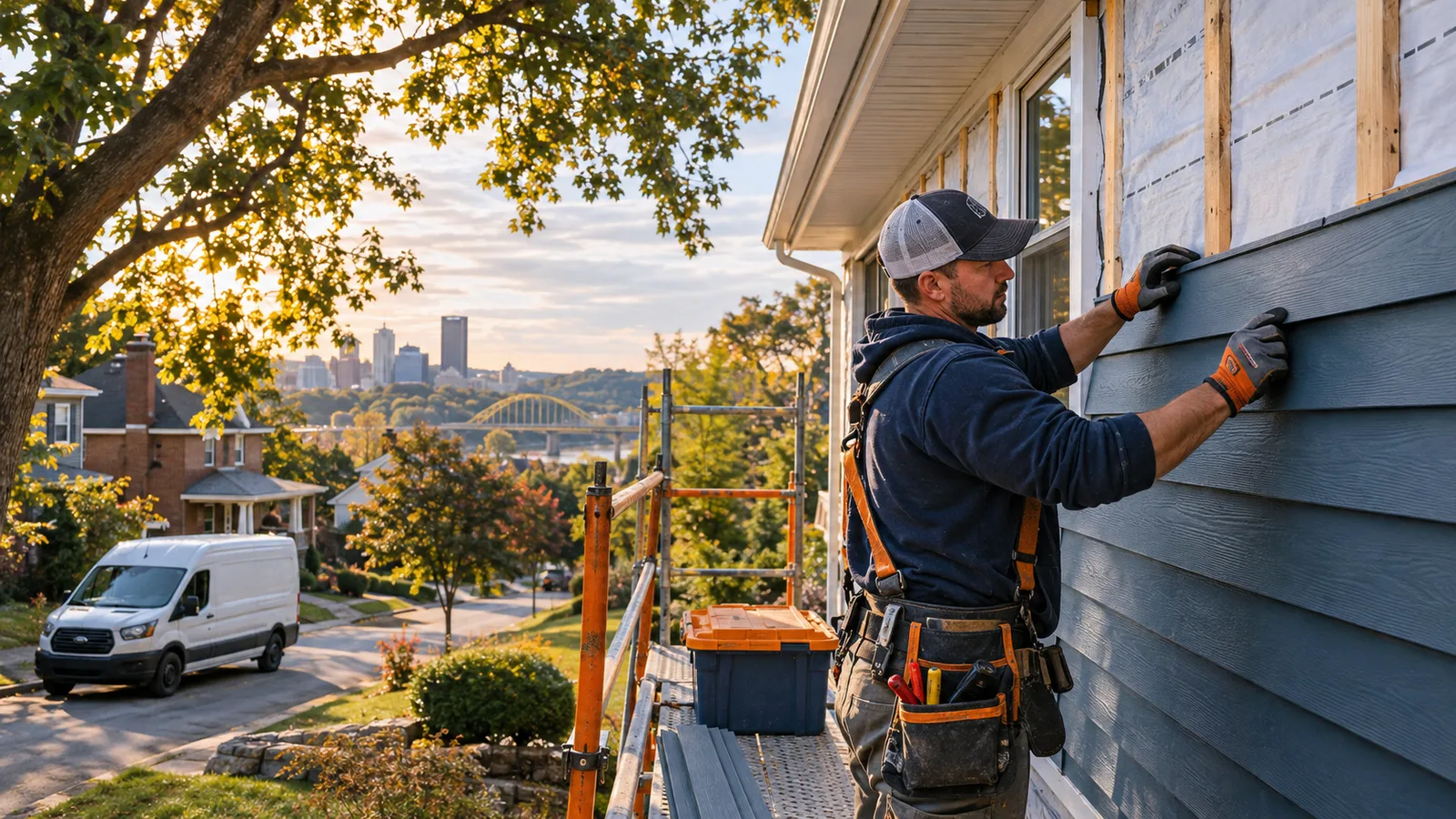
Professional siding crew installing new lap siding on a Pittsburgh-area house with safe access equipment and visible wall preparation

Siding contractors in Pittsburgh, Pennsylvania

Siding Contractors Pittsburgh

Get a careful exterior assessment, clear material options, and an installation plan built for Western Pennsylvania weather.

Exterior assessment Written project scope Weather-barrier planning Final walkthrough

Complete exterior planning

A Pittsburgh siding contractor focused on the whole exterior system

Homeowners comparing siding contractors Pittsburgh can rely on should look beyond color samples and price per square. Siding works as part of an exterior wall assembly that includes sheathing, a water-resistive barrier, flashing, insulation where specified, and properly detailed openings. If one part is overlooked, water can reach the wall even when the finished siding looks good.

Siding Installers Pittsburgh evaluates the existing exterior, identifies visible trouble spots, and develops a written scope before installation begins. As siding specialists serving Pittsburgh, we account for wall condition, access, trim details, and the way each elevation handles sun, wind, and runoff. The result is a plan based on the house rather than a generic package.

Pittsburgh's freeze-thaw cycles, rain, summer humidity, and temperature swings make water management especially important. A qualified contractor should explain how window and door openings will be flashed, how penetrations will be sealed, and how clearances will be maintained near roofs, decks, and grade. Those details protect the wall behind the siding and make future maintenance easier.

Book Your Free Inspection

Scope and installation details

What Pittsburgh siding contractors should include in the scope

Existing-wall inspection

The estimate should address loose panels, open joints, damaged trim, soft sheathing, staining, and other visible signs of moisture or movement. Concealed damage may only become clear after removal, so the contract should explain how change orders are handled.

Water-resistive barrier

Housewrap or another approved water-resistive barrier belongs behind the cladding and must be integrated with flashing. Seams, corners, openings, and penetrations require deliberate detailing rather than relying on caulk alone.

Flashing and drainage

Kick-out flashing, head flashing, sill details, utility penetrations, and roof-to-wall intersections direct water outward. The method depends on the wall and roof configuration, but the drainage path should remain continuous.

Correct fastening

Vinyl siding needs room to expand and contract, so fasteners should not pin panels tightly. Fiber cement and engineered wood have their own fastening schedules, edge clearances, joint treatments, and manufacturer requirements.

Trim and ventilation details

Corner posts, starter strips, utility blocks, soffit, fascia, and transitions affect both appearance and performance. Existing intake and exhaust ventilation must remain open rather than being covered during exterior work.

Cleanup and closeout

A complete scope states how removed materials will be handled, how the property will be protected, and what the final walkthrough covers. Product information and applicable warranty documents should be provided at completion.

Material selection

Choosing siding for Pittsburgh homes

Material choice should fit the wall assembly, maintenance expectations, architectural character, and budget. Vinyl siding is widely selected for its low maintenance and range of profiles. Good installation leaves proper movement space at panel ends and avoids overdriven fasteners. Insulated vinyl adds a contoured foam backing, but it does not replace correct flashing or air sealing.

Fiber-cement siding offers the appearance of painted lap boards or panels and resists damage from insects. It is heavier than vinyl and requires suitable cutting, fastening, clearances, joint treatment, and paint maintenance. Engineered-wood siding provides wood-like profiles with less weight than fiber cement, although cut edges and field damage must be treated according to the manufacturer's instructions.

Traditional wood can suit older houses when owners accept regular inspection, painting, and localized repair. Aluminum may also remain on existing homes, particularly where a repair or selective replacement is being considered. A Pittsburgh siding contractor should distinguish between a cosmetic preference and a performance need, then provide samples that can be viewed against the house in daylight.

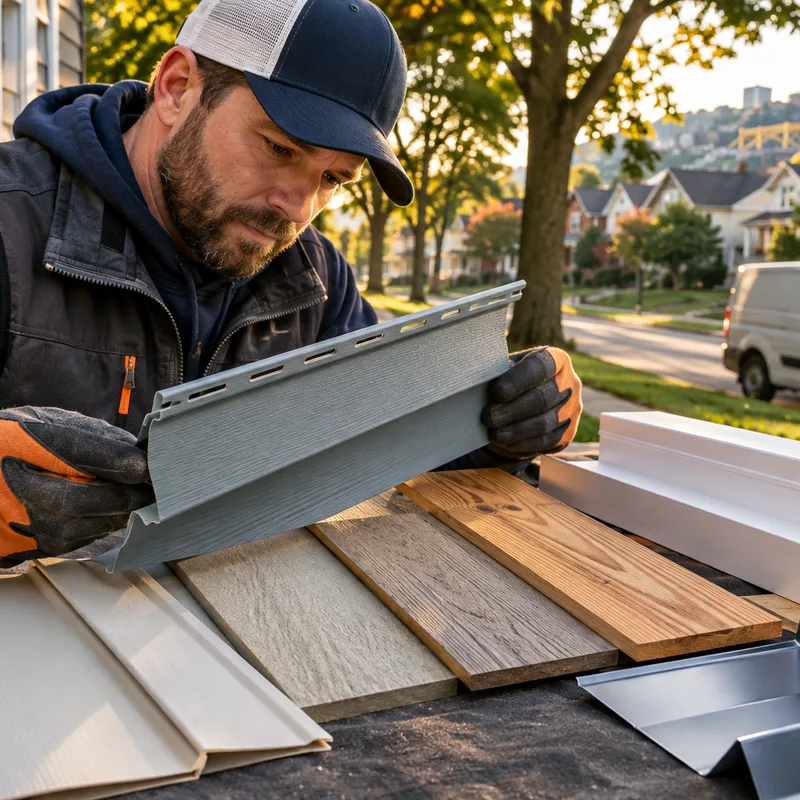
Vinyl, fiber-cement, engineered-wood, and traditional wood siding samples beside exterior trim and flashing components

Property-specific planning

Local housing conditions affect the installation plan

Pittsburgh's housing varies sharply by neighborhood, so access and substrate conditions cannot be assumed. In Lawrenceville, closely spaced rowhouses can limit staging and material handling along side elevations. Squirrel Hill includes older detached homes where existing wood siding, layered cladding, and detailed trim may require extra preparation. Steep streets and hillside lots in neighborhoods such as Mount Washington can affect ladder placement, scaffolding, delivery, and debris removal.

Dormers, bay windows, porch roofs, masonry transitions, and roof-to-wall intersections add labor because every change in plane needs trim or flashing. On older homes, a contractor may also encounter multiple siding layers, uneven sheathing, or trim that was wrapped during an earlier project. These conditions should be discussed before work starts, even when their full extent cannot be known until removal.

Permit requirements depend on the property and scope. The City of Pittsburgh's Department of Permits, Licenses, and Inspections administers construction permitting within the city, while surrounding municipalities use their own processes. Historic-district rules or property-specific restrictions may affect visible exterior changes. The contractor should identify who is responsible for confirming approvals and scheduling any required inspections.

Book Your Free Inspection

Assessment to walkthrough

How a siding installation should proceed

  1. 01

    Exterior assessment and measurements

    The contractor examines elevations, openings, trim, penetrations, roof intersections, grade clearance, and access. Measurements should account for waste, profile layout, and the actual surfaces receiving new material.

  2. 02

    Written scope and selections

    You receive the proposed material, profile, color, trim approach, preparation, flashing work, disposal terms, and assumptions about concealed damage. Product substitutions and optional work should be identified before the contract is signed.

  3. 03

    Property and wall preparation

    Crews protect nearby surfaces, establish safe access, and remove or prepare existing cladding as specified. Any exposed sheathing damage is documented, priced, and addressed before it is covered.

  4. 04

    Barrier, flashing, and siding installation

    The water-resistive barrier and flashing are integrated to shed water outward. Starter strips, corners, trim, mounting blocks, and siding are installed using the fastening and clearance rules for the selected product.

  5. 05

    Inspection and final walkthrough

    The completed exterior is checked for secure panels, consistent reveals, finished penetrations, open drainage paths, and cleaned work areas. The owner can review maintenance needs and applicable product or workmanship documentation.

Project budgeting

How Much Does Siding Installation Cost in Pittsburgh?

A full siding installation in Pittsburgh typically ranges from about $12,000 to $35,000, while large homes, premium materials, extensive trim, or major sheathing repairs can cost more. Vinyl generally occupies the lower range; fiber cement, engineered wood, and detailed historic-style work commonly move upward.

Final price depends on wall area, material, removal layers, access, stories, openings, flashing, insulation, trim, and hidden damage. A written estimate should separate included work from allowances and optional upgrades. The exact cost is confirmed after an exterior assessment and measurements.

Book Your Free Inspection

Proposal and crew review

How to compare siding contractors in Pittsburgh

Compare contractors on scope, documentation, and installation method rather than the total alone. Ask for proof of current insurance and any licensing or registration required for the work. Confirm who will supervise the crew, whether subcontractors may be used, and how the property will be secured between workdays.

Each proposal should identify the manufacturer and product line, profile or exposure, color, underlayment, trim components, flashing responsibilities, removal method, cleanup, and payment schedule. Ask whether the price assumes sound sheathing and what labor or material rates apply if damaged substrate is uncovered. Warranty language should separate manufacturer coverage from the contractor's workmanship terms.

Be cautious when a quote leaves flashing, wall preparation, disposal, or trim undefined. Also ask how weather delays are communicated and how materials will be stored. The strongest bid is the one that makes competing proposals easy to compare and gives both parties a clear record of the agreed work.

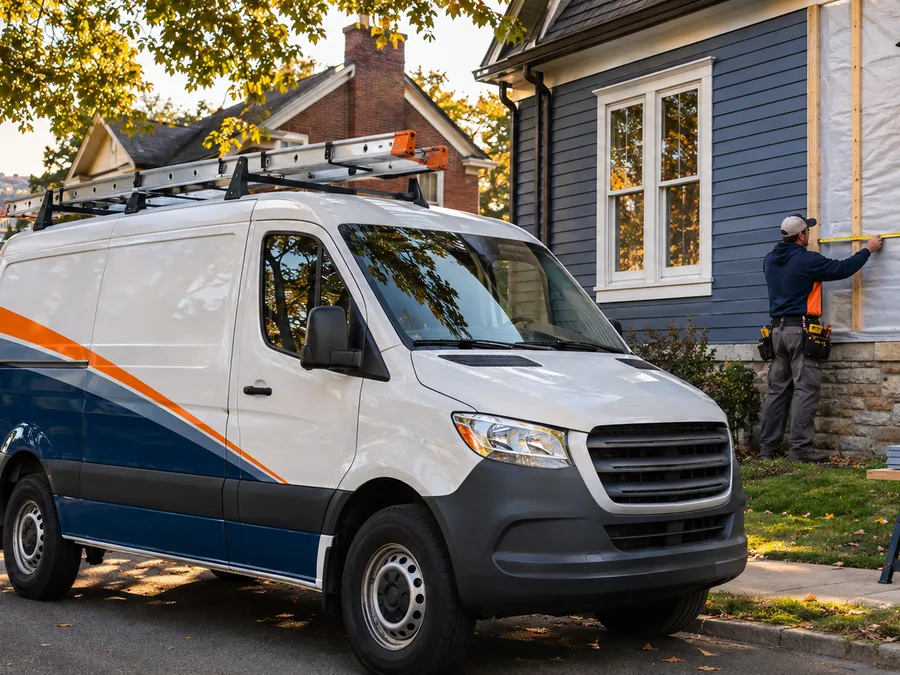
Siding professional reviewing exterior measurements, wall penetrations, and written project notes with a homeowner beside a Pittsburgh house

A careful exterior review can separate a straightforward replacement from a project that needs flashing, sheathing, or access allowances. Start with a written scope built around the actual house.

Book Your Free Inspection

Homeowner questions

Questions about siding contractors in Pittsburgh

How long does siding installation take in Pittsburgh?

Many whole-house siding projects take roughly one to three weeks once installation starts, but the schedule depends on house size, material, access, weather, trim complexity, and concealed repairs. Closely spaced homes or steep Pittsburgh lots can slow staging and material movement. The contractor should provide a projected sequence and explain how rain or unsafe conditions affect workdays.

Should old siding be removed before new siding is installed?

Removal is often the better choice when the existing cladding is damaged, uneven, layered, or hiding suspected moisture problems. It allows the contractor to inspect sheathing and integrate a new water-resistive barrier and flashing. Installation over existing siding may be possible in limited circumstances, but the wall must remain flat, secure, and compatible with the manufacturer's requirements.

Which siding material handles Pittsburgh weather well?

Vinyl, fiber cement, engineered wood, and properly maintained traditional wood can all perform well when installed as a complete water-managed system. Pittsburgh's rain, humidity, freeze-thaw cycles, and temperature changes make flashing, drainage, clearances, and fastening as important as the cladding itself. Maintenance tolerance and the home's architecture should guide the final choice.

Do siding contractors Pittsburgh PA homeowners hire need permits?

Permit needs depend on the municipality, property, and exact scope, so they should be confirmed before work begins. Within the City of Pittsburgh, construction permitting is administered by the Department of Permits, Licenses, and Inspections. Surrounding boroughs and townships have their own rules, and properties subject to historic review may require additional approval for exterior changes.

What should be included in a siding contractor Pittsburgh PA estimate?

A siding estimate should identify wall area, removal, disposal, product line, profile, barrier, flashing, trim, soffit or fascia work, preparation, cleanup, schedule assumptions, and payment terms. It should also state how concealed sheathing damage is documented and approved. Written product and workmanship warranty terms make it easier to compare Pittsburgh siding contractors on equal scope.

Can a Pittsburgh siding contractor install siding during winter?

Siding can be installed during parts of a Pittsburgh winter when conditions meet product requirements and crews can work safely. Cold temperatures affect vinyl handling and movement allowances, while sealants and coatings have manufacturer temperature limits. Snow, ice, high wind, or wet wall conditions may delay work, so the schedule should allow for weather interruptions.

How can I tell whether I need siding repair or full replacement?

Localized damage may justify repair when compatible material is available and the surrounding wall remains sound. Widespread loose panels, repeated water entry, extensive rot, failing coatings, or multiple aged layers may support replacement. A contractor should inspect every elevation and explain whether the problem is limited to the cladding or involves flashing, trim, or sheathing.

Plan your siding project with a clear scope

Tell Siding Installers Pittsburgh what you have noticed, what material you are considering, and what you want to change. We will help define the exterior work and the details that belong in your estimate.